Saturday, June 28, 2025

Raspberry jam

Even the best shop-bought or cottage industry jam can't compete with a good homemade batch. There are just three keys to making it well at home:

  • use good quality fruit (and don't bother to wash it)
  • don't try to make too much at once (less is more)
  • if you're not sure whether your jam has set yet, then it hasn't.


Ingredients

(makes two small jars)

  • 650g raspberries
  • Juice of 1/2 lemon
  • 150ml water
  • 500g granulated sugar

  1. Put a clean saucer in the freezer for the wrinkle test.
  2. Put the fruit, lemon juice and water in a large saucepan, and simmer gently for a few minutes, then add the sugar, and simmer until dissolved.
  3. Bring the jam to a rolling boil, and boil for about 10 minutes, until you think it has reached setting point. (105oC, if using a thermometer; by eye/ear, when the bubbles on the jam become large and start to plop).
  4. Remove from the heat and test for a set by placing a blob of jam on your cold saucer, leaving it to cool in the fridge, then push the blob with your finger. If the surface wrinkles and your finger leaves a trace, the jam has set. If the jam hasn't set, bring it back to the boil and cook for another minute or so before testing.
  5. Transfer the hot jam into sterilized jars, seal with sterilized lids and allow to cool.


Wednesday, May 22, 2024

Papas aliƱadas / Simple Cadiz-style potato salad

This is one of those dishes that seem super simple but where the homemade version never quite measures up to the one served in restaurants (or in this case, bars). I stopped making this at home a few years ago because my efforts, while always perfectly good, fell disappointingly short of what I was aiming for.

Was there some missing ingredient? Some magic technique? Did the Spanish hospitality business have access to a mystery supply of a unique variety of potato?

Satisfyingly, I think I've cracked it. The key:  the right kind of potatoes (when Spanish recipes say 'new' they don't mean what we understand to be 'new potatoes' in English; they just mean ones that have been harvested relatively recently); cook the potatoes in their skins and peel them afterwards; use a lot of oil; add the onion and parsley just before serving.


Ingredients

700 g of white potatoes (Maris piper work well)

1 teaspoon of coarsely ground salt

100 ml of good quality olive oil

30 ml of sherry vinegar

100 g of mild onion

plenty of fresh parsley (about 2 tablespoons?)


Method

  1. Steam or boil the potatoes in their skins until just done. Peel, chop into large chunks (about 2 cm).
  2. Combine the potatoes, salt, oil and vinegar in a large bowl.
  3. Roughly chop the onion (it's there for flavour, not to be eaten), finely chop the parsley and add to the potatoes just before you serve.


Sunday, January 7, 2024

Beef with broccoli

This recipe is a slightly tweaked version of the one on the magnificent Chinese food blog Woks of Life.


Ingredients

500 g of beef steak
1/2 teaspoon of baking powder
50 ml water

for the marinade
2 teaspoons of cornflour
2 teaspoons of vegetable oil
2 teaspoons of oyster sauce

for the sauce
100 ml chicken stock
1 teaspoon of sugar
1 tablespoon of light soy sauce
1 teaspoon of dark soy sauce
1 tablespoon of oyster sauce
a few grinds of pepper

500g of tenderstem broccoli or broccoli florets
vegetable oil for frying
2 cloves of garlic, finely chopped
1 inch of garlic, finely chopped
2 tablespoons of Shaoxing wine (or use dry white wine)
1 tablespoon of cornflour, mixed with 2 tablespoons of cold water

Method

  1. Slice the beef into fine strips (use a very sharp knife and chill the meat for 30 minutes in the freezer beforehand - or just buy beef that has already been cut for stir-frying).
  2. Put the beef in a large bowl, add the baking soda and water, massage the mix into the beef, mix the marinade ingredients, add to the beef, and leave to tenderize for at least 30 minutes.
  3. Combine all the sauce ingredients.
  4. Bring a large pot of salted water to the boil, blanch the broccoli quickly - no more than 1 minute - strain and set aside.
  5. Once the beef has tenderized, fry it in batches in a very hot wok for two to three minutes. (You'll probably need to do at least four batches.) Set aside.
  6. Heat a little oil in the wok, add the garlic and ginger, fry for a few seconds, add the Shaoxing wine, then add the sauce ingredients and bring to a simmer.
  7. Next, add the cornflour and water mixture, and cook briefly to thicken the sauce.
  8. Turn the heat up to full, add the beef, stir well to coat and cook for a minute or so, before adding the broccoli.


Hummus

The key to a light hummus is... water.


Ingredients

400g tin of chickpeas, drained
60 g tahini
60 ml water
30 ml olive oil
juice of 1 lemon
1 clove of garlic, finely chopped
1/4 teaspoon salt

Method

Combine all of the ingredients in a food processor and blend very thoroughly for a couple of minutes.

You can use this basic recipe for any bean-based dip; swap out the chickpeas for another pulse (butter beans, broad beans, kidney beans); replace the tahini with peanut-butter, cashew nuts or walnuts; throw in some other spices (cumin, coriander); heat it up with some chilli sauce; swap the lemon for a lime.


Saturday, August 26, 2023

Plain scones

 The secret to a good scone, in my opinion, is to knead the dough lightly and shape by hand. If you don't knead the dough enough, the scone will be too crumbly; knead it too much or - heaven forbid! - roll it out, and your scone will be too heavy.


Ingredients

300g self-raising flour
50g caster sugar
75g butter
160ml milk

Method

  1. Heat the oven to 180oC. Sift the flour into a mixing bowl, add the sugar, cut the butter into small pieces and add to the flour and sugar mixture, rubbing it gently with your fingertips until it is the texture of breadcrumbs.
  2. Add the milk, mix with a spoon, and then knead gently until you have a smooth dough.
  3. Divide the dough into eight even pieces, form each piece into a ball, and flatten slightly to form a fat, rough disk. Any cracks and folds will add texture to the finished scone.
  4. Place the rounds on a lightly floured baking sheet and bake for about 14 minutes, until they are golden.

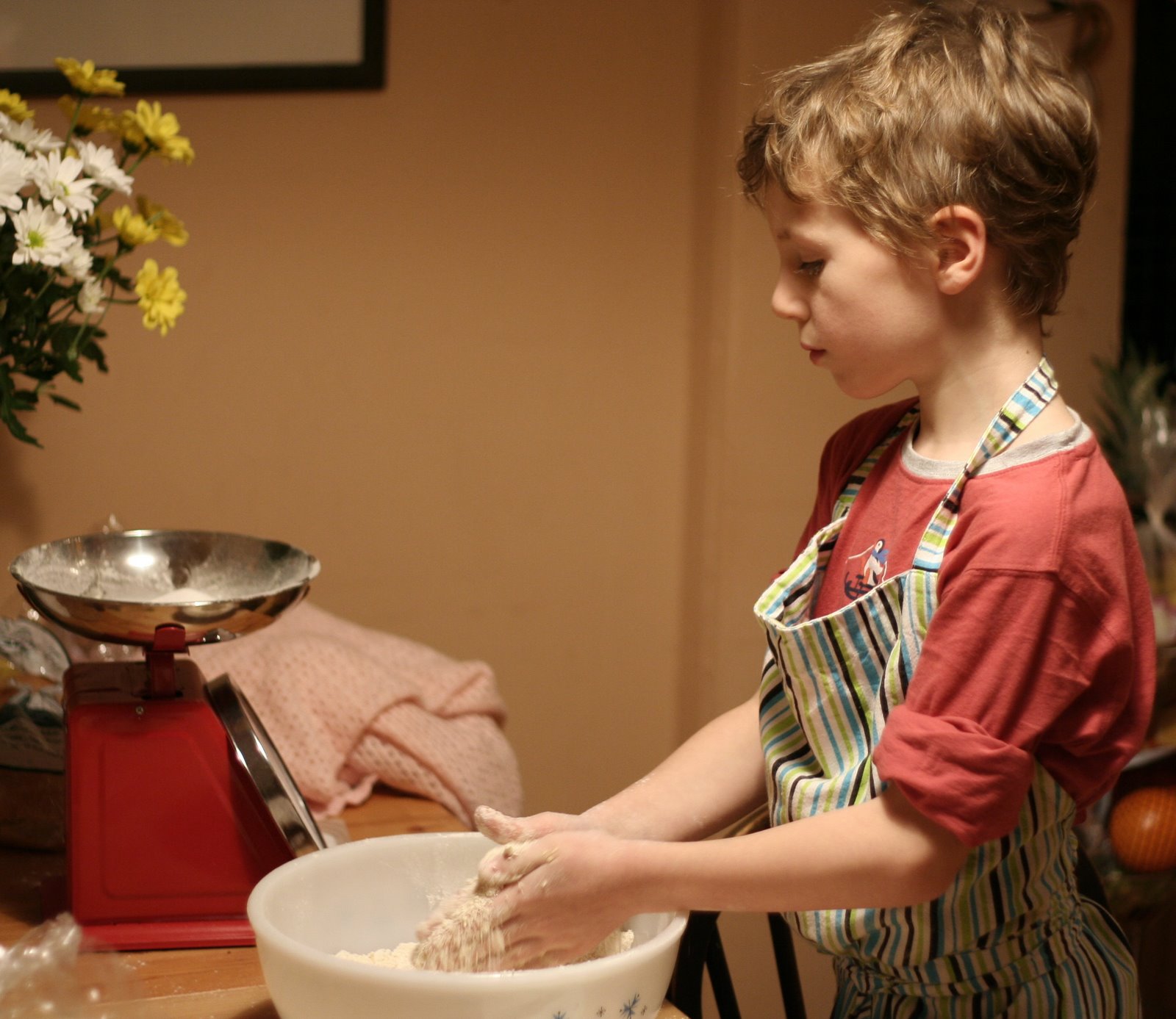
I've been making scones for years but I have to confess that it took me a while (okay, years!) to realise that, while not rolling and cutting them was fine, I'd gone too far in the other direction and that by barely kneading the dough at all my scones were crumblier (and heavier) than they should have been. Nonetheless, I have lots of happy memories of making scones with my kids for friends and family, so here are a couple of photos from the archive.


Thursday, August 17, 2023

Stir-fried cucumbers with peanuts and black bean sauce

 Now that I don't always have other people to cater for, my daily cooking often consists of a quick and simple vegetable dish served with noodles. I had never even thought of cooking cucumbers until I had them in a Chinese restaurant with chicken but it struck me that the European aversion to doing so is quite irrational - a low-level taboo even.


Ingredients

1 cucumber
2 tbsps black bean and garlic sauce
1 tbsp minced ginger
2 tbsps vegetable oil
50 g peanuts
1 tbsp soy sauce
6 spring onions

Method

  1. Cut the cucumber into thick matchsticks.
  2. In a wok or large frying pan, combine the  black bean sauce and the ginger with the vegetable oil, and fry gently.
  3. After a minute or so, add the peanuts, fry for another 30 seconds or so, then add the cucumber.
  4. Turn up the heat and fry for another 3 minutes, add the soy sauce and chopped spring onions, cook for a further 30 seconds and serve.


Sweet potato, green bean and coconut curry

 I'm not sure if my spice tolerance has gone down over the years or if I've just come to my senses and realised that too much chilli gets in the way of other flavours. Whatever the reason, I use far less chilli in my own cooking and studiously avoid anything excessively spicy when eating out. This is a very simple mild curry that can be prepared from beginning to end in about 30 minutes.


Ingredients

1 onion
500g sweet potato
200g green beans
2 tbsps vegetable oil
2 cloves garlic
2 tsp minced ginger
mild curry powder
1/2 tsp salt
400 ml coconut milk
juice of 1 lemon
small bunch of fresh coriander

Method

  1. Peel and chop the onion. Peel the sweet potato and cut into small chunks. Top and tail the green beans and cut into 3 cm lengths.
  2. Gently fry the onion in the vegetable oil until it is translucent.
  3. Add the finely chopped garlic and minced ginger and fry for another minute or so.
  4. Add the curry powder and salt, fry for another 30 seconds.
  5. Add the sweet potato and the coconut milk, and simmer gently until the potato is almost done (about 15 minutes).
  6. Add the green beans and cook for another 5 minutes, until they are done.
  7. Add the lemon juice and chopped coriander, mix and serve.

Curry powder

Lots of recipes call for huge numbers of individual ground spices - and even roasting and grinding spices from scratch. It's the kind of detail that can turn preparing a simple dish into an unappealing chore. It's often quicker and easier simply to use a ready-made spice mix and it may be better, too: using spice mixes means you can cook with a far wider range of spices, and your spices will probably be fresher too. 


Tuesday, August 15, 2023

Steamed spicy sour aubergine

 It's the sign of a good dish when it evolves in your kitchen over the years. I first started making a version of this as 'yu hung aubergine' about 15 years ago but since then I have simplified it and also pushed it in a spicy sour direction.


Ingredients

1 aubergine
2 tbsps vegetable oil
1 tbsp minced ginger
1 tsp chilli sauce
1 tbsp balsamic vinegar
2 tbsps light soy sauce
4 spring onions

Method

  1. Cut the aubergine crosswise into 3 pieces, then cut each piece lengthwise into 6 or 8 wedges. Steam the aubergine for 8 minutes, until cooked but still firm.
  2. Combine the oil, ginger and chilli sauce in a frying pan and cook gently for a couple of minutes. (I avoid adding minced ginger to hot oil as it will spit.)
  3. Add the aubergine, mix well to coat in the sauce, and fry for another minute or so.
  4. Add the vinegar and soy sauce, stir well and simmer for another couple of minutes.
  5. Finely chop the spring onions, add to the aubergine mixture and cook for another 30 seconds or so.

I've probably eaten some version of this about once a week for the last five years, usually served with noodles for a quick lunch or supper, but sometimes as a side dish or pimped up with the addition of some firm tofu. The simplest way to vary this dish is by using a different chilli sauce. The aubergines above were made with a tablespoon of Laoganma's Crispy Chilli in Oil. It's not too hot, and includes crunchy soy beans and is flavoured with Szechuan pepper.


Sunday, August 13, 2023

Pickled mushrooms in olive oil

This is a method of preserving vegetables called "sott'olio" in Italian (under oil). It consists of parboiling them in seasoned vinegar, then covering them with oil. It can be used for aubergines or courgettes as well.


Ingredients

250g of mushrooms
200ml of cider vinegar
1 tsp of whole coriander seeds
1 tsp of black peppercorns
4 bay leaves
1/2 tsp of salt
100 ml of olive oil

Method
  1. Add the coriander, peppercorns, bay leaves and salt to the vinegar, bring to the boil, reduce heat to minimum, cover and simmer for 5 minutes.
  2. Wash and slice the mushrooms (not too thinly) and add them to the vinegar. Bring back to the boil, turn off heat and leave to cool.
  3. Transfer the mushrooms to a jar or a small tupperware, adding oil between each layer and more to cover, and store in the fridge.
I wasn't sure whether to post this but then I got really hungry late at night, remembered I had a bowl of this sitting in my fridge and immediately ate half of it (with crackers and hummus) and it was absolutely delicious.


Risotto with fennel and courgette

I used to make a sausage version of this (and sometimes still do) but I've gone semi-vegetarian over the last few years so one of the key flavourings in the sausage version (fennel) gradually took centre stage. I often do variations on this - leaving out the fennel altogether, throwing in some peas or plenty of fresh basil, squeezing some lemon juice into it... A good recipe should have a method at its core, and the details should provide one way of implementing this. I'm always in favour of simplifying recipes where possible and also of taking advantage of whatever may be available - in your fridge or the local shops.


Ingredients
100g butter
1 fennel bulb
1 courgette
2 cloves of garlic
1 tsp salt
300g arborio rice
900 ml of boiling water
1 vegetable stock cube
freshly ground black pepper
freshly grated Parmesan

Method

  1. Roughly chop the fennel bulb, slice the courgette, finely chop the garlic
  2. Dissolve the stock cube in the boiling water
  3. Put 50 g of the butter, the fennel, courgette, garlic and salt into a large, heavy-bottomed saucepan and fry gently for about 10 minutes, until the fennel and courgette have softened.
  4. Add the rice and stir thoroughly.
  5. Add a few ladlefuls of the stockwater to the rice, and stir gently until the liquid is almost absorbed.
  6. On a low heat, add the rest of the stock, a ladleful at a time, stirring while you cook, until the rice is tender but not mushy. (This should take about 30 minutes).
  7. Remove from heat, add the remaining butter, stir well, cover and leave to sit for 2 minutes. Serve sprinkled with black pepper and Parmesan.


Monday, August 7, 2023

Pickled herring

I like the seasonality of herring, the fact that it is only available for a few months during the summer. I was in the fishmonger the other day (Williamson of Portobello) and behind me was a large Russian lady with bright pink hair. We were both in for some fresh herring to pickle but unfortunately they had sold out. The fishmonger offered us some of their ready-pickled herring instead but we both turned it down ("too soft" I said, "too vinegary" the Russian lady said) and instead got to chatting about the best way to pickle herring (and why the shop-bought stuff was inferior). The Russian lady was originally from Odessa. She recommended adding some vodka to the marinade. It was another couple of weeks before I got back to the fishmonger. They had plenty of fresh herring this time but there was no sign of the Russian lady.


I eat and cook very differently from my grandparents, but there are a few overlaps and they have great emotional weight. This is one of them - there was always a jar in my grandparents' fridge (shop bought, though - suspect my grandmother would have thought this home-pickling of mine was madness).

Ingredients

6 herring, filleted
1/2 onion
20g of fresh dill

For the marinade

300 ml of cider or white wine vinegar
300 ml of water
2 teaspoon of whole coriander seeds
2 teaspoon of white mustard seeds
2 teaspoon of black peppercorns
2 teaspoon of salt
2 teaspoon of caster sugar

optional: 3 tablespoons of vodka or gin

  1. Place all the marinade ingredients in a small saucepan, bring to a boil, stir to make sure the salt and sugar are fully dissolved, and leave to cool.
  2. If the herring fillets are still attached, separate into two halves, lengthwise. Finely slice the onion.
  3. Place a layer of onion in the bottom of a rectangular tupperware (one that is just long enough for the herring), cover with some fresh dill, pour a little of the cooled marinade over it (through a tea strainer), then place a layer of herring fillets on top. Repeat until you have used up all the herring. If you have any onion and dill left, put some on top, pour the remaining marinade over the fish so that it is covered, put the lid on the dish and leave to pickle in the fridge for three or four days.

Monday, May 1, 2023

Raspberry blondies


Ingredients

175 g butter
200g soft light brown sugar
100g caster sugar
200g white chocolate
1 tsp vanilla extract
3 eggs

200g self-raising flour
75 g frozen raspberries

Method

  1. Melt the butter, light sugar, caster sugar and 100g of the white chocolate in a bain marie. Remove from heat and allow to cool to room temperature.
  2. Line a square 20 x 20 cm tin with greaseproof paper. Preheat oven to 180oC.
  3. Add the vanilla extract to the cooled mixture, followed by the beaten eggs, one at a time.
  4. Add the flour, and mix until smooth.
  5. Add 50g of the remaining white chocolate, broken into small pieces, together with the raspberries, and pour the batter into the tin.
  6. Bake for 50 minutes until just set, and leave to cool in the tin.
  7. Melt the remaining 50 g of white chocolate in a bain marie and drizzle over the blondies.

Saturday, September 17, 2016

Mango, coconut and lime cake

I've been a late comer to Great British Bake Off but now I'm hooked. I have to admit that I'm in awe at how talented (most of) the participants are, but it's also clear that keeping it simple and getting the basics right is often the surest route to success.

One thing that I hadn't expected was to be inspired by the use of unusual ingredients, but after watching a recent episode I decided it was time to reboot my banana bread.


The 'recipe' here is just the proportion of dry to wet ingredients, the basic methods and cooking times. You can use it as a template and swap ingredients in and out - tinned peaches instead of mango, oat milk instead of coconut milk, replace the chilli with some ginger and so on.

Ingredients
120g caster sugar
60g soft butter
150g tinned mango, drained and pureed
50g coconut milk
1 egg, beaten
140g self-raising flour
juice of 1/2 lime
2 or 3 drops of chilli sauce

Method

  1. Set the oven to 180oC and line and grease a small loaf tin.
  2. Cream together the sugar and butter.
  3. Add the mango, coconut milk and egg to the butter and sugar, and mix well.
  4. Mix the flour into the resulting batter, then add the lime juice and chilli sauce.
  5. Pour the mixture into the loaf tin, and bake in the preheated oven for 45 minutes until golden.
  6. Allow the cake to cool in the tin for 5 minutes before transferring to a rack.

Thursday, May 12, 2016

Fried Chinese spare ribs

I love Chinese food, I love spare ribs and I love (almost) anything deep fried. When I started making this, I was slightly scared by the long list of ingredients. Then, to my surprise, I found that I had all of them in my cupboard or fridge - yes, even the fermented red bean curd! The original recipe comes from The Woks of Life, which I think might just be my favourite new food blog.

Ingredients

1 kg pork ribs
1 tablespoon of fermented red bean curd, plus 1 tsp of the sauce from the jar
1/2 tsp ground pepper
1 tsp sesame oil
1 tsp fivespice powder
2 tbsps Shaoxing wine
1 1tbsp dark soy sauce
1 tbsp maple syrup
1/2 tsp garlic powder
1/2 tsp onion powder
1 tsp baking soda
2 tbsps cornflour
2 tbsps plain flour
oil for frying

Method


  1. Chop the pork ribs into 1-inch segments. (You'll need a heavy-duty cleaver for this - if you don't have one, this recipe is as good an excuse as any!)
  2. Combine all of the ingredients - except the cornflour, plain flour and oil - in a large bowl, mix well, and leave to marinade for at least an hour.
  3. Heat plenty of vegetable oil in a wok or frying pan to a medium heat (about 170 C).
  4. Mix the cornflour and plain flour in with the ribs so that they are thoroughly coated, then fry them in small batches for about 7 minutes until they are done. 


Sunday, January 10, 2016

Spanish chicken with garlic (pollo al ajillo)

I'd become a bit bored of cooking over the last couple of years and it took me a while to figure out why. The answer was surprisingly simple: I was no longer making the dishes I wanted to make but was instead trying to second-guess the somewhat more conservative tastes of my children. Chicken is a case in point. Whenever there was a whole chicken in my fridge, I felt under pressure to do roast chicken, but what I really wanted to make was a chicken curry with handfuls of fresh coriander, some Szechuan fried chicken, or this Spanish chicken cooked with garlic. Oddly enough, my more selfish approach to cooking doesn't seem to have an impact on my kids, who enthusiastically ate the risotto that I hadn't made since 2014 for fear of offending their delicate palates!


I thought I already had a recipe for this on my blog but was surprised to find that I didn't. Then I turned to Moro (by Sam and Sam Clark) and there was my recipe - in the form of a heavily annotated version of the original (including annotations, additions and deletions). The Moro recipe is actually very good but I feel it is a little too restauranty (a few details that don't add much but help make a simple recipe seem daunting). And my version is definitely closer to the pollo al ajillo that I used to eat in a bar off Plaza San Antonio in Madrid back in the late 1980s with my friend Richard.

Ingredients
1 medium chicken (approx 1.5 kg)
salt
black pepper
olive oil
2 bulbs of garlic
6 bay leaves
200 ml of white wine

Method

  1. Cut the chicken into small pieces and season with plenty of salt and black pepper. (I use a cleaver, so I cut the thighs and drumsticks in half and even get a few meaty portions from the back. If you only have an ordinary kitchen knife, then satisfy yourself by cutting the legts through the joints and cutting the breast lengthwise and then crosswise to get about 10 pieces, including the wings.)
  2. Separate the garlic into cloves but don't peel or chop.
  3. Put plenty of olive oil in a large, heavy-bottomed frying pan, add the garlic, and gently fry until the garlic is golden.
  4. Remove garlic to a bowl, turn up the heat, and fry the chicken in batches until it is crispy and golden.
  5. Remove the fried chicken, pour off most of the oil, return the garlic to the pan, add the bay leaves and wine, and simmer for a couple of minutes.
  6. Return all of the chicken to the pan, stir well, cover and cook on a low heat for about 20 minutes.


Prawns and garlic stewed in olive oil

This is a really simple dish. There is only one trick to it, which is to start with cold oil so that the prawns stew slowly, rather than frying quickly.


Ingredients
olive oil
200g of peeled prawns
4 cloves of garlic, peeled and finely sliced
salt
parsley

Method
Put plenty of olive oil in a medium sized saucepan. Add the prawns and the garlic and cook over a medium heat until the prawns are cooked. (Don't overcook them; they should be juicy, not tough.)
Sprinkle with a little salt and some parsley and serve.

Salt cod fritters (bolinhos de bacalhau)

This recipe is adapted from a rather charming comic-strip version by Len Deighton (the spy author). I've tweaked it a bit as the proportions in the original were slightly wrong, causing the fritters to fall apart on contact with the hot oil! The salt cod comes from our local Portuguese cafe, Casa Amiga, where I often go with Sammy to read the papers, drink coffee and eat custard tarts.


Ingredients
500g salt cod
500 ml milk
2 bay leaves
1 kg potatoes
4 eggs
1 handful of parsley
1/2 tsp salt
plain flour
breadcrumbs

Method
  1. Wash the salt cod well, and leave it to soak in plenty of water, in the fridge, for at least 48 hours, changing the water every 24 hours. (It will keep like this for several days, so don't feel obliged to use the cod on Wednesday just because you started soaking it on Monday.)
  2. Put the rinsed cod in a small saucepan with the milk and the bay leaves, bring to a boil, cover and simmer on a low heat for about 30 minutes, until the cod is soft. Remove the cod from the milk.
  3. Peel and dice the potatoes, add to the fishy milk, bring to a boil, cover and simmer on a low heat for about 20 minutes, until the potatoes are cooked.
  4. Strain the milk off into a jug, remove and discard the bay leaves..
  5. Beat one of the eggs, add it to the potatoes together with a little of the reserved milk and mash the potatoes.
  6. Chop the parsley and add it to the potato, together with the salt.
  7. Remove the skin and any bones from the cod, break the cod into flakes, add to the potato and mix well. If the mixture is too dry, add a little more milk.
  8. Beat the remaining three eggs.
  9. Use two dessert spoons to shape the cod and potato mixture into quenelles.
  10. Coat the quenelles in flour, then in beaten egg, and finally in breadcrumbs. (See photo below.)
  11. Fry the fritters in plenty of oil until they are golden on the outside.

Friday, January 8, 2016

Risotto with Italian sausages and dried porcini

Every cook has a repertoire of dishes and techniques that grows and changes over time. I can't always put my finger on when I started cooking a particular dish, but I know that this is one that I first cooked when we spent a few months in Bagni di Lucca in the autumn of 2009. It was a regular for a while, and then my kids became less than enthusiastic about it so I stopped making it. I was reminded of it the other day when I spotted a packet of arborio rice in the cupboard, so I decided to give it another go. The original recipe is from Maxine Clark's Flavours of Tuscany, although I have tweaked it a little bit.


I'm always slightly in two minds about committing a recipe like this to the page - there's a danger of obscuring the flexibility of the whole business. So long as you have the right kind of rice, the key proportions (three parts liquid to one part rice) and the basic technique (slowly add the liquid to the rice), you can make risotto.

Ingredients
800 ml of hot chicken stock
100 ml of white wine
10 g dried porcini
100g butter
300g fresh Italian sausages
1 onion, finely chopped
2 cloves of garlic, finely chopped
100 ml of sieved tomatoes
1 tsp fennel seeds
1 tsp dried thyme
1/2 tsp salt
300g arborio rice
freshly ground black pepper
freshly grated Parmesan

Method

  1. Soak the dried porcini in the hot stock. Remove the skins from the sausages.
  2. In a large, heavy-bottomed saucepan, gently melt 50g of the butter, add the skinless sausages and fry slowly, breaking the sausage meat up as you go.
  3. When the sausage meat has browned, add the onion and garlic and fry gently for another 10 minutes until the onion is golden.
  4. Add the tomatoes, fennel seeds, thyme and salt, and simmer for 5 minutes.
  5. Add the rice and stir thoroughly.
  6. Remove the porcini from the stock and add them to the rice.
  7. Add a few ladlefuls of the stock and the glass of white wine to the rice, and stir gently until the liquid is almost absorbed.
  8. On a low heat, add the rest of the stock, a ladleful at a time, stirring while you cook, until the rice is tender but not mushy. (This should take about 20 to 30 minutes).
  9. Remove from heat, add the remaining butter, stir well, cover and leave to sit for 2 minutes. Serve sprinkled with black pepper and Parmesan.


Saturday, January 2, 2016

Szechuan fried chicken

When I go to the Wing Sing Inn in Edinburgh, I always order the spicy Szechuan chicken - little pieces of chicken, on the bone, fried with vast quantities of dried chillies and Szechuan pepper. The chillies are spicy and the Szechuan pepper provides a tingly, numbing sensation.


Tired of roast chicken, I finally decided to have a crack at making it at home. The following recipe is adapted from Fuchsia Dunlop's version of this dish. Although none of the stages is particularly difficult, it's quite involved as it requires you to dismember a chicken, chop it into small pieces (with the bone still in) then double-fry it, in batches, (You will need a cleaver to chop the chicken into small segments.) The quantity of chillies looks a bit scary, but the Chinese ones are not as spicy as their Indian cousins, and they are not meant to be eaten, just to impart flavour to the chicken pieces.


Ingredients

1 chicken (approx 1 to 1.5 kg)

marinade
30 ml Shaoxing wine
40g ginger, thickly sliced
1 tsp salt
2 spring onions, roughly chopped

frying
500 ml vegetable oil (preferably groundnut or rapeseed), plus 4 tbsps
1 tbsp Szechuan chilli bean paste
20g ginger, peeled and sliced
4 cloves of garlic, peeled and sliced
4 spring onion whites, sliced
100g Chinese dried chillies
25g Szechuan peppercorns
1 tbsp Shaoxing wine
1/2 tsp salt
1 tsp sugar
4 spring onion greens, sliced
2 tsp sesame oil

Method

Part 1: chopping the chicken

  1. Mix the marinade ingredients in a large bowl.
  2. Separate the wings and legs from the body of the chicken.
  3. Cut off and discard the wing tips and ends of the legs. (I use them to make stock.)
  4. Separate the wings into two pieces by cutting through the middle joint, and separate the legs into thighs and drumsticks by cutting through the middle joint. With a cleaver, chop each wing piece and each leg piece crosswise into 2 cm segments.
  5. Separate the breast from the back by cutting through the ribcage. Lay the breast section flat.skin side down, cut lengthwise through the breastbone to separate it into two, then chop the breast meat crosswise into 2 cm segments.
  6. Lay the back flat, skin side down, and cut lengthwise through the ribs as close to the backbone as possible. Discard the backbone or set it aside to make stock. Chop the two meaty back sections into 2 cm segments.
  7. Place the chicken pieces in the bowl with the marinade, mix well and leave for 15 minutes.
Part 2: frying the chicken
  1. Heat the oil in a wok until it is very hot (about 190oC).  Add chicken pieces to the oil, one at a time, discarding the ginger and spring onion as you go. Don't overfill your wok - depending on the size of your wok, the size of your chicken and the size of your segments, you will probably need to fry the chicken in three batches, bringing the oil back up to its original heat before adding the next batch. Cook each batch of chicken for 3 to 4 minutes, until golden, remove from the wok and leave to drain in a wire strainer or on a wire rack.
  2. When you have fried all of the chicken once, reheat the oil, fry each batch again until crispy, remove from the wok and leave to drain in a wire strainer or on a wire rack.
  3. Transfer the used oil to a heatproof container, and brush the wok clean to remove any burnt pieces of chicken. Add 4 tbsps of fresh oil to the wok, and return to a medium heat. Add the chilli bean paste to the oil, stir and fry for 30 seconds, Add the ginger, garlic and spring onion whites, stir and fry for 1 minute. Add the dried chillies and the Szechuan peppercorns, stir and fry for another minute or so. Add the chicken pieces, Shaoxing wine, salt and sugar, and stir well to coat the chicken.
  4. Remove from heat, drizzle the sesame oil over the chicken, sprinkle with spring onion greens, and serve.

Saturday, August 1, 2015

American-style breakfast pancakes

Before I had children, when I was on holiday I would pore over my guidebooks in the morning (this was pre-internet) and try to figure a way of fitting in breakfast, lunch and dinner without exploding like Mr Creosote. When you travel with kids, you have to put their needs first (otherwise nobody has any fun) so on our recent trip in the States mealtimes were dominated by street food, picnics and snacks.


We did have plenty of diner breakfasts, though, and I realised that my pancakes had become a little bit, well, sad. One of the first things I did when I got home was to search out a decent recipe for American-style pancakes and then adjust and tweak it. I'm pretty happy with the results - light but still with plenty of texture and flavour.


Ingredients
375 ml whole milk
1 egg
20 ml vegetable oil
2 tbsp white vinegar
175 g self-raising flour
75 g fine maizemeal
a pinch of salt
2 tablespoons caster sugar
1 tsp baking powder


Method
  1. Measure the milk into a jug, add the beaten egg, the vegetable oil and the vinegar, and leave to stand for 5 minutes.
  2. Measure the self-raising flour, maizemeal, salt, sugar and baking powder into a mixing bowl. 
  3. Add the milk and egg to the dry ingredients and mix briefly until just combined.
  4. Put a heavy-based frying pan on a medium heat and brush with a little oil. Pour a ladleful of the batter into the pan, and cook at a low heat until it starts to form a skin on top. Flip over and cook the other side and cook until golden.
Notes on ingredients
The vinegar and milk mixture is an attempt to recreate buttermilk. If you have access to buttermilk, then use that instead. The maizemeal adds texture, flavour and colour, so resist the temptation to replace it with flour.